A Review Of Prominent Circuit Breaker Manufacturers

How to Choose a Circuit Breaker

There are a few different criteria to consider when selecting a circuit breaker including voltage, frequency, interrupting capacity, continuous current rating, unusual operating conditions and product testing. This article will give a step by step overview on selecting an appropriate circuit breaker for your specific application.

Voltage Rating

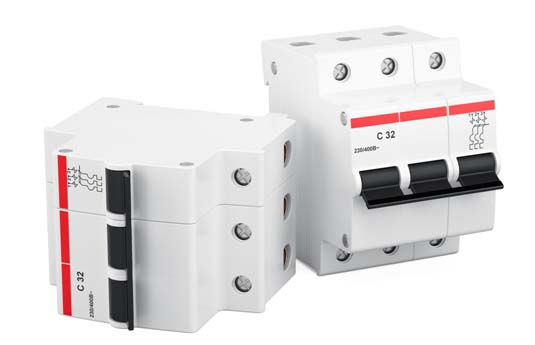
Circuit Breakers Available in Different Sizes & ConfigurationsThe overall voltage rating is calculated by the highest voltage that can be applied across all end ports, the distribution type and how the circuit breaker is directly integrated into the system. It is important to select a circuit breaker with enough voltage capacity to meet the end application

Frequency

Circuit breakers up to 600 amps can be applied to frequencies of 50-120 Hz. Higher than 120 Hz frequencies will end up with the breaker having to derate. During higher frequency projects, the eddy currents and iron losses causes greater heating within the thermal trip components thus requiring the breaker to be derated or specifically calibrated. The total quantity of deration depends on the ampere rating, frame size as well as the current frequency. A general rule of thumb is the higher the ampere rating in a specific frame size the greater the derating needed

Maximum Interrupting Capacity

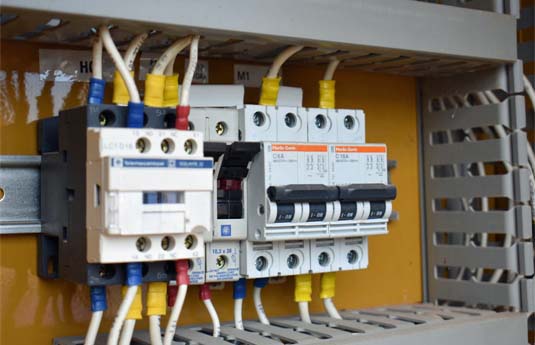
The interrupting rating is generally accepted as the highest amount of fault current the breaker Control Panel Circuit Breakerscan interrupt without causing system failure to itself. Determining the maximum amount of fault current supplied by a system can be calculated at any given time. The one infallible rule that must be followed when applying the correct circuit breaker is that the interrupting capacity of the breaker must be equal or greater than the amount of fault current that can be delivered at the point in the system where the breaker is applied. Failure to apply the correct amount of interrupting capacity will result in damage to the breaker.

Continuous Current Rating

In regards to continuous current rating, molded case circuit breakers are rated in amperes at a specific ambient temperature. This ampere rating is the continuous current the breaker will carry in the ambient temperature where it was calibrated. A general rule of thumb for circuit breaker manufactures is to calibrate their standard breakers at 104° F
 

How to Choose the Right Circuit Breaker

Circuit breakers are a very important part of electrical safety. They control the amount of electricity that flows through a building’s electrical wiring system. If your home suffers an electric overload or a short circuit, a properly functioning circuit breaker will detect the issue and cut off the electrical supply. This will protect your wiring and appliances until you take care of the problem and restart the electricity. However, in order for a circuit breaker to do its job properly, you have to match the right circuit breaker with your exact needs. Read the following simple explanations and you’ll be ready to choose the appropriate circuit breaker for your home.

Low-voltage thermal magnetic circuit breakers are best suited for most single-family homes. They allow for electrical currents that measure only up to 1000 amps

Medium voltage circuit breakers are used in larger buildings, such as apartment complexes and businesses, that use up to 72,000 volts on a regular basis

High-voltage circuit breakers are used alongside power lines and in other places that use more than 72,000 volts regularly.

Figure Out the Breaker Size You Need

In order to choose the best-size circuit breaker for your particular household needs, check the wire size printed on the cable that is to be connected to the circuit breaker. You will see 2 measurements listed: The first will tell you the wire gauge, followed by a dash and a second number which indicates how many wires are inside the cable. Once you have established the wire gauge
 

How to Test a Circuit Breaker

Circuit Breaker Tester: Clamping Ammeter

Circuit breakers that trip every time they’re reset may be overloaded. In order to diagnose a circuit breaker overload you can test the circuit breaker by using a clamping ammeter. This circuit breaker tester is used to check overloads and shorts that are in progress and determine whether the electric current is running through the circuit. The clamping ammeter should be clamped to a single wire not the cable in order to accurately test the circuit breaker.

Circuit Breaker Tester: Electromagnetic Circuit Finder (Current Tracer)

Circuit breakers may trip and disconnect all electricity, but sometimes that is not the case. An electromagnetic circuit finder will test to see if the circuit breaker has a live connection. It will determine which individual breaker controls a live circuit.

Circuit Breaker Tester: Electrostatic Wand

Circuit breaker testing can be helpful if you are trying to determine the flow of electricity in the circuit breaker panel. A circuit breaker Need link should be tested even if you have turned it off; it is important to make sure the wires are dead and there is no current flowing in them

Circuit Breaker Tester: Multimeter

The multimeter circuit breaker tester combines the characteristics of a voltmeter and the ohmmeter in one. This multipurpose circuit breaker testing device has multiple functions. Like the voltmeter it measures the level of voltage in the circuit and also measures the continuity and resistance level (ohmmeter). Obtaining information about both electrical readings can help pinpoint circuit breaker problems quickly and accurately so that repairs can be made.

Circuit Breaker Tester: Voltmeter

Circuit breaker testing can get complicated when using small inexpensive testers. A voltmeter is a popular circuit breaker testing tool used by homeowners. This circuit breaker tester measures the voltage running through the electrical circuit. The voltmeter is used by touching one prong to each of the parts of a circuit between which you need to measure voltage. For example, you would touch one prong to the neutral wire and the other to the hot wire to measure the voltage in a circuit
 

How Circuit Breakers Work

The circuit breaker is an absolutely essential device in the modern world, and one of the most important safety mechanisms in your home. Whenever electrical wiring in a building has too much current flowing through it, these simple machines cut the power until somebody can fix the problem. Without circuit breakers (or the alternative, fuses), household electricity would be impractical because of the potential for fires and other mayhem resulting from simple wiring problems and equipment failures.

In this article, we’ll find out how circuit breakers and fuses monitor electrical current and how they cut off the power when current levels get too high. As we’ll see, the circuit breaker is an incredibly simple solution to a potentially deadly problem.

Voltage is the “pressure” that makes an electric charge move. Current is the charge’s “flow” — the rate at which the charge moves through the conductor, measured at any particular point. The conductor offers a certain amount of resistance to this flow, which varies depending on the conductor’s composition and size.

Voltage, current and resistance are all interrelated — you can’t change one without changing another. Current is equal to voltage divided by resistance (commonly written as I = v / r). This makes intuitive sense: If you increase the pressure working on electric charge or decrease the resistance, more charge will flow. If you decrease pressure or increase resistance, less charge will flow. To learn more, check out How Electricity Works.
 

How Circuit Breakers Work

The problem

It’s a dark and stormy night. You flick on the hall light, plug in the coffee maker and crank up the portable electric heater. You’re starting to feel comfy, when you hear a faint, yet ominous, click—and everything goes black. It’s not a cat burglar or a poltergeist playing tricks with your electrical system. It’s an overloaded circuit being protected by a tripped electrical circuit breaker. Kinda spooky and mysterious, eh? Not if you know a few simple things.

Figure A: A Properly Functioning 15-AMP Circuit

This circuit has wires and an electrical circuit breaker that can easily carry the amperage required by the devices

on it.

What’s a circuit?

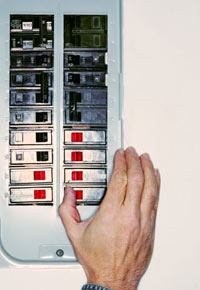
When electricity enters your home, it goes to a circuit breaker box (or fuse box in older homes), where it’s divided into a number of circuits. Each circuit is protected by a breaker or fuse. Bedrooms, living rooms and family rooms where only lights, alarm clocks and other small electrical items are usually used are normally on 15-amp circuits. Kitchens, laundry rooms, bathrooms and dining rooms—places where you’re more likely to use toasters, irons, hair dryers and other big-watt items—are usually served by heavier-duty, 20-amp circuits. Major appliances like 5,000-watt electric water heaters and 10,000-watt electric ranges demand so much electricity that they take their own 30- to 50-amp dedicated circuit (See Fig. D in “Additional Information” below), protected by big, “double pole” circuit breaker sizes.

What’s a circuit overload?

The circuit breaker, the wire and even the wire insulation are all designed to work as a system—and that system has limits. Try to push more current through a circuit than it’s designed for and things start happening (Fig. B). Wires heat up under the burden of carrying the excess current. When this happens, the insulation around the wire can degrade or even melt. When insulation melts, current is no longer confined within the wire. That’s when fires start. Luckily, the circuit breaker senses the excess current and “trips” to stop the flow of power before damage occurs

Figure B: An Overloaded Circuit

This circuit has too many energy-demanding devices on it and is trying to carry more amperage than it’s designed for. Things begin to heat up. Luckily the circuit breaker senses this, trips and “breaks” the circuit.
A Brief Brush Up On What You Need To Know About Termites

My Pest Control Quick Tips

All About Termites: Species & Best Protection

Imagine this scenario: you suspect your home has termites, did a research and symptoms seem like termite infestation. You then made an enquiry and a termite treatment is suggested that costs heavy. After spending a few days with the arrangement and treatment, the biggest nightmare falls on you – it doesn’t seem to work!

termite damage wood frames

I notice damages on my door frames, kitchen cabinets and bedroom wardrobe — first reaction to fixtures spoilage would either go to the renovation/interior design firm or furniture retail for damaged and faulty doors and cabinets. Before you make the complaint, pause and check if it’s a result of drywood termite infestation. Drywood Termites produce moisture as they feed into your fixtures and causes deform and warping effect. This also explains why sometimes you find it difficult to open and close your door!

termite mud tubes

I see lines or tubes grown on the wall — an Ugly muddy line, which is actually mud tubes are formed on your wall or corner of skirting. It looks unsightly, and you tried scrapping them off, but only to see other parts of your wall started to have presence of these tubes as well. These are Subterranean Termites foraging tubes that are made out of wood and soil for traveling and food sourcing purposes. Taking the fast easy way out to remove these tubes visibly could potentially mean more damaging outcome in time to come.

termite damages wall paint

My wall paint seems to be peeling off with bubbling blobs — Was it the water spillage or leaking pipes that causes paint peel on your flooring or structural surfaces? What if there are no signs or water leaks? Was it a poor paint job? Subterranean Termites are capable of producing moisture as they infest on wood, and as this moisture reaches the wood surface, it causes the pain to bubble and peel. Wood consumption also thins the paint coating, and causing the peeling and damaging effect

termite swarm

There are “flying” insects or ants around my window sills and edges — Are they flies or broken wings? Confused if those are ants, flies or other flying insects? The answer is they could be swarms of Subterranean Termites that lands on your window sills as their wings start to shed. This could also mean a possibility of a termite activity. By removing these wings and swarms, does not necessarily eradicating the problem, instead contact a pest control specialist to perform proper inspection and treatment


Tips To Choose Right Termite Control Services

The expected reaction from the side of home owners when they notice termite infestation in their home is contacting a professional termite control company for assistance. The DIY pest control is not preferred in such a case as the selection of the right treatment is done on the basis of the infestation. Another reason for which you should avoid DIY techniques for termite control is that the professional companies dealing in the pest control Brisbane have the necessary tools and experience to deal with the pests, which, most probably, you may not be having.

However, when you search on the internet or explore your local market, what you find is that there are plenty of pest control companies that claim themselves to be the best in the area. You are likely to get confused that which company you should rush to. Well, here we are going to mention some tips to help you out in the selection of a right company for Brisbane termite services.

Make sure the company meets the licensing requirements

As there are so many pest control service providers in Brisbane and the surrounding areas, great chances are there that many of them have started their services on the basis of their knowledge only. So, what you need to make sure is that the company is having a license for delivering the services. Also, look for the experience they are having in the field.

Be sure that they offer an inspection

No doubt that after listening to your issue, they would tell you the treatment options but always remember the surety about the fact that which treatment would be the best needs a thorough inspection of the property. It’s OK if your service provider recommends you different options, but before choosing the one, they should be ready to inspect the property.

Inspect what services they offer

When it comes to the pest control, some agencies offer the services for all types of pest, while some specialize in the eradication of one type of pest only. It can be the termites, insects, rats and more they would be offering the services for. Thus, you must know that what services they offer and whether their services list includes the one you are looking for or not.


How To Choose a Professional Termite Company

What should I look for when choosing a professional termite pest control company?

Every professional pest control company should offer a guarantee of effective services. Before signing with a company, make sure you understand the terms and conditions and how long the guarantee is good for.

Ask around for recommendations. A good reputation is an indicator of good and dependable service.

When you have a company in mind, check with your local Department of Agriculture or Better Business Bureau to find out if they have had any substantial complaints filed against them.

Don’t underestimate the power of credentials. The company you select should be a member of your state pest control association and the NPCA (National Pest Control Association). This is good indication that the company has access to the latest pest control technologies and education.

Don’t go with the first company recommended. Obtain proposals from a minimum of 3 reputable termite control companies. A proposal is very important and should document the company’s plan for chemical treatment procedures, bait station placements, repair or wood work, copies of insecticide labels, and warranties.

Find out about liability insurance.

Thoroughly compare bids before making a decision.

Make sure that follow-up inspections are included in the contract. The extermination contract should also include annual or semi-annual follow-up inspections to make sure the home is protected on an ongoing basis

What should I know about annual termite pest control contracts?

It is a common misconception that an “annul contract” implies re-treatment by the pest control company on an annual basis. This is not how an annual contract works. Annual treatments are actually illegal under state and federal law, unless evidence of termite activity is present.

If an annual contract is written up, then the pest control company is liable for termite treatment only if you or the company can detect evidence of termite activity.

Termite treatments carry an automatic one-year guarantee in most cases, as do some homes. After one year, the contract may be renewed if deemed necessary.

On average, it costs between $75 and $200 to renew your annual contract. The exact price will depend on the size and construction of the structure.

Do I need the annual contract?

The answer to this question is a matter of preference. Some things to consider:

If you have plans to sell your house in the near future, an annual contract is a good idea. This ensures that if termites are discovered at the time of inspection, the pest control company, NOT YOU will be responsible for termite treatment.

If you plan to sell your home, find out whether the pest control company allows for the transfer of the contract to a new homeowner, or if it automatically terminates.

If you do not plan on selling anytime soon and you feel comfortable with doing home inspections yourself, you don’t need an annual contract. The day that you find evidence of termite activity, however, you will need to decide if you can handle your own termite treatments or choose a professional company at that time.

Termites are always present in nature, but that does not mean they are always attacking our homes. However, it does mean there is a chance they will attack and that every home is at risk. Bait Stations can be a great tool for self-monitoring, to lend peace of mind.

Keep in mind that performing your own soil treatment with termiticides is not a guarantee that termites will never penetrate that barrier and invade your home.


Dealing with termites

Bug busters

Termites are a destructive pest. It’s important to have regular and thorough inspections of your home to detect the early signs of termite activity and infestation. However, finding a reliable and experienced pest manager can be hard to come by, and promising credentials don’t always guarantee they are reliable. Here we’ll tell you what to ask and what to look for when it comes to termite management.

There are around 300 species of termite in Australia, but only a handful cause problems. Subterranean termites (also called white ants) cause most of the damage around the country. They feed off cellulose-containing materials like timber.

Termites can cause major structural and economic damage to homes and commercial buildings by eating the inside of the structure and leaving only a thin shell for protection from the outside environment.

How to recognise termites

Temperature and rainfall seem to have the largest impact on termite activity, followed by the house’s age. If you stumble across a termite nest on your property, don’t disturb it until you’ve determined an appropriate termite management plan with a qualified pest manager. Once disturbed, termites might abandon the area, move elsewhere and remain undetected.

The different approaches to termite management

The Building Code of Australia requires that all new homes and extensions have a termite management system in place in all areas (except Tasmania, where the termite risk is negligible). Homes built after July 1995 must have a ‘durable notice’ of treatment fixed to a prominent position in the building (near the meter box or the entrance to a crawl space),


TIPS FOR REALTORS TO RECEIVE THE BEST TERMITE INSPECTION

Over the past few years, real estate trends in Chandler, Gilbert and Mesa have shown a steady rise in the average sale prices according to online real estate authority, Trulia. This bodes well for sellers and realtors alike but before you make a listing official, there are some things to consider regarding termite inspections and reports. When should I get the termite inspection? Who is the most qualified to complete the termite report? What if the house needs termite treatment? How much is it going to cost? These are all questions we help answer below to ensure you find a pest control company that you can easily work with for all your termite needs.

FINDING A RELIABLE TERMITE CONTROL COMPANY

If you are a realtor or you’re thinking of selling your home, it is considered a best practice to disclose any termite issues or treatments that have occurred in the home. If you have never had to deal with termite infestation before consider yourself fortunate! However, just because you don’t see outward signs of termite infestation, does not mean they are not present. Lending institutions and buyers usually require a termite inspection and report to be filed before completing the escrow process. Therefore, it’s important that you find a pest control company that you trust to efficiently complete a termite inspection and submit the W.D.I.I.R. (Wood Destroying Insect Inspection Report). Learn more about the termite report and inspections in Arizona. To find a termite control company, you can easily search the website of the Better Business Bureau for the category of ‘termite control’ and it will provide a list of businesses with the number of years they have been part of the BBB, their rating and any complaints filed against them. When calling pest control companies, always be sure to ask if they offer a full guarantee on their services, a warranty on their termite treatments and if their termite inspectors or technicians are licensed.

WHEN TO GET A TERMITE INSPECTION & UNDERSTANDING THE REPORT

As mentioned above, a termite report is usually required by most lending institutions before they will complete escrow and if a buyer is paying cash, then it is still very likely that they are going to want to know the termite history of the house or any possible concerns that a termite inspector lists. Many realtors suggest that sellers get the termite inspection and report before officially putting the house on the market. That way the seller knows if they are in the clear or if they need to budget for any termite treatment or repairs. Plus, the realtor will need to negotiate in the purchase contract what the seller is responsible for.  Because the report is only as good as where the termite inspector can look and gain access (attics and crawl spaces should be viewed when accessible) there is no guarantee that termites are not present or that they won’t be in the future. Depending on findings in the termite report, there are items termed ‘Section 1’ issues or ‘Section 2’ issues. Section 1 refers to any infestation or damage in the wood while Section 2 lists any potential problem areas that could be preventatively treated to avoid termite infestation.

NEGOTIATING TERMITE TREATMENT & COSTS BETWEEN SELLER/BUYER

Different areas throughout the country may have different practices when it comes to who is responsible for paying for the termite report and any issues that are listed. There are no laws specifying which party is responsible so that is where the realtor’s expertise comes in handy. Generally in Arizona, the seller pays for the termite inspection and report plus any Section 1 issues. This means that if there is a termite infestation the seller will pay for termite treatment plus any damage, which could be fairly pricey (in the $2,000 range for treatment or much more for repairs). That leaves the buyer to pay for any preventative measures from the Section 2 findings in the termite report. This could mean localized treatment to areas of concern such as anywhere that wood touches the earth or any place that excess moisture is present making it easier for termites to invade.

As realtors, sellers or home buyers it is important to be open and honest when it comes to termite issues and treatments. Unfortunately many homes have termite issues but that means you are not alone and you shouldn’t be surprised if the house you are buying or selling needs termite treatment or repairs. Luckily, we are always here to lend a hand so don’t hesitate to call for any termite inspection or treatment needs!

Recent Posts