Cameraman reveals his true brand
It’s one of life’s more reliable axioms that if a man has to tell you he’s a good dude, there’s a fair chance he is actually an insufferable gobshite.
who prides himself on seeing things the rest of us simply cannot grasp — took issue with a camera operator for, well, operating a camera. On the 7th hole, the surly pseudoscientist hit a mediocre greenside bunker shot and angrily threw his club — manufactured by Cobra and available from all good stockists — into the sand. After marking his ball —brought to you by Bridgestone — he had a testy exchange with a camera operator who captured this, before storming to the 8th tee in a pair of stylish Puma shoes.
optimism in thinking that being shown acting like a jerk would hurt his image rather than merely solidify it.
The world No. 10 — a ranking he has reached thanks in part to his Flight Scope — was sufficiently upset to keep talking after the round without bothering to note the hour on his Rolex timepiece. “For that to damage our brand like that, that’s not cool in the way we act because if you actually meet me in person, I’m not too bad of a dude, I don’t think,” he said.
Just a few weeks ago, he posted to Instagram an intimate, 15-minute movie in which a camera caressed him as he ambled from his bedroom to breakfast, lingered over his form during workouts, and gazed adoringly at him as he cruised the neighborhood in his convertible. It was a love letter to himself, part Narcissus, part Pee-wee Herman, set in a hall of mirrors.
How to become a Cameraman
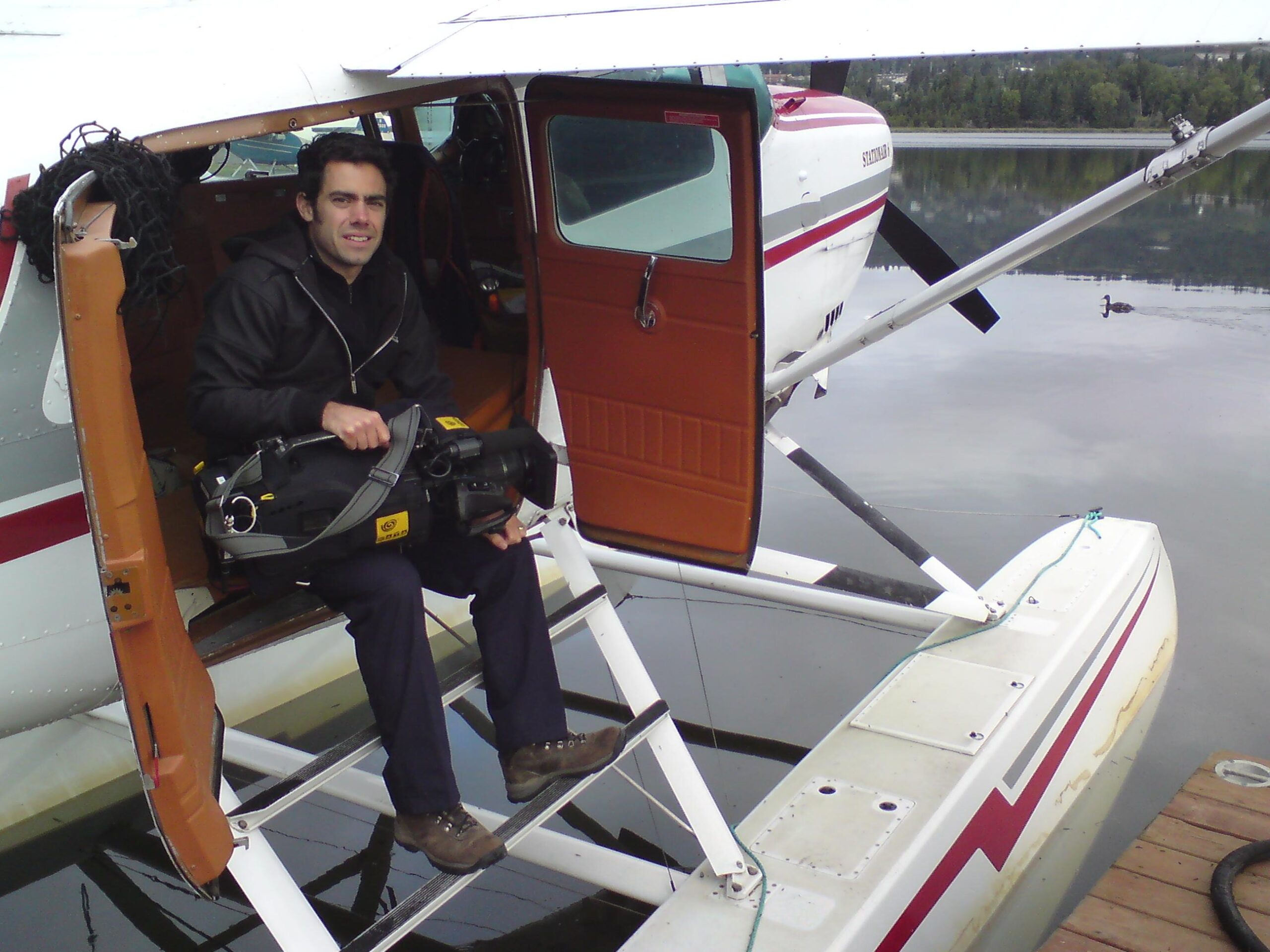
I have been sent a few emails recently about getting started in television, and how to become a TV Cameraman. Before starting down this road it is worth asking yourself the question “Do I really want to become a cameraman?” You are about to embark on a career that could last the rest of your working life, so it is worth thinking about this one. If you are wondering how much money cameramen make you may also be interest in this.
Firstly, here are a few pluses to being a cameraman:
1) You get to travel to interesting places.
2) You get to meet interesting people.
3) There is a creative element to the job, which can be very rewarding.
4) It is very varied, one day you could be filming a sunset in the Caribbean, the next you could be a in London sewer. (I am speaking from experience here).
Secondly, here are a few negatives:
1) Travelling can become excessive, and it is often beyond your control. If you are a freelancer it is very difficult to turn down work, as you get older and have a husband/wife/kids, you may not be as keen to spend months of the year abroad.
2) All most all cameramen are freelancers, I personally love this lifestyle, but it isn’t for everyone. At the first sign of a recession or slow-down in the economy, the first thing that happens is companies pull back on advertising spend, this in turn means broadcasters choose to spend less and commission less programmes and, therefore, work for a cameraman will drop off. For some people this is fine, they can spend the free time polishing their lenses or something, for others, it can be very stressful.
3) The freelance lifestyle is somewhat erratic. Here is a conversation that frequently goes on between all cameramen or women and their wives or husbands:
Spouse: “Are you around next weekend, I want to have a BBQ”
Cameraman: “Don’t know, might be in Cambodia.”
Spouse: “When will you know?”
Cameraman “Don’t know.”
This sounds ridiculous to people outside television, but if you work in TV it is totally normal. Production companies are often waiting for confirmation of talent/flights/budget/people etc etc, it is a nightmare juggling act that the production managers have to deal with. Not every shoot is like this, but it is in no way unusual. For the cameraman, this means planning things in the future can be tricky, and it is something that effects not just you, but your friends and family.
Tips for Directing Great Live Video
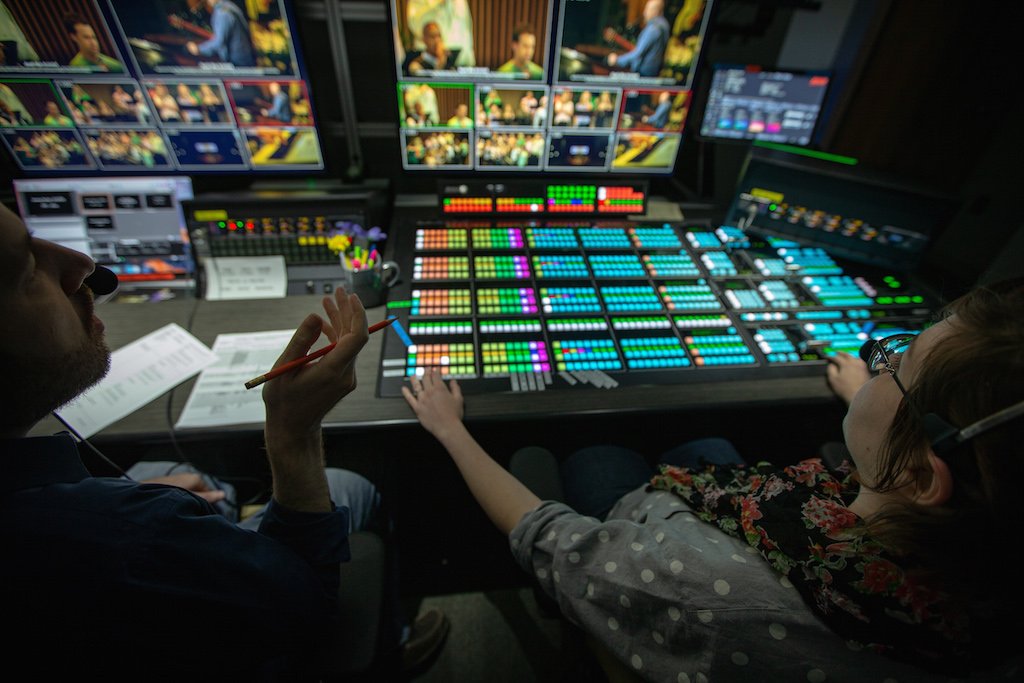
Directing a live video production isn’t for the faint of heart. It requires the ability to deliver clear direction, quick feedback, and maintain a steady emotional equilibrium when dealing with others. Following are simple tips from a seasoned church production director that can help.
Use consistent terminology
Few things are more confusing for a camera operator than to hear a mix of different words, or to hear certain words used interchangeably.
Understand some camera basics
While it’s not a requirement that a good director have previously been a camera operator, it can certainly help. Often, if an op has a problem during a service or show, the first line of defense is to get on intercom and tell the director what’s happening
Take notes during rehearsal
The director, not the camera ops, is ultimately responsible for the quality of the camera cut. After all, the cameras are simply moving at the discretion of the director, who bears the responsibility for telling the story of what’s happening on stage.
Mentally plan the transitions
Nothing makes or breaks a service more so than transitions. A smooth one can make things feel like they’re all flowing together cohesively, while a poor one makes you feel like you just jolted to a halt as in a car accident.
Video Production Tips
If you work in the video production world, it’s very likely that at some point a client will hire your camera crew (or just a videographer) to capture video of a speech or presentation. Whether it’s for a medical conference, corporate event, keynote speech, short talk, or a live presentation, it doesn’t matter…the same applies to all: Preparation is everything. In other words, makes sure to get some pre-production work done before your camera team starts to film.
Pre-Production
For our production crew here in Vienna there’s never enough information the client can give us before any video shoot. Here are just a few points:
– Find out what kind of video the client wants. For instance, do they have examples of a style they’re looking for? In most cases the answer is yes.
– What’s the content of the presentation?
– Does the client want the speech / presentation filmed in its entirety? Or do they only need snippets? This determines how flexible the camera operator can be with the camera set-up.
– Will there be a screen/projector? And does this need to be incorporated into the final video?
– Location scouting! Make sure to scout the location beforehand and find out how big the room/stage is, where you can place the camera(s), is there be a PA system (sound board)? Will the speaker be holding a microphone? Wearing a wireless lav mic? Or will there be a microphone attached to the podium? Where are the power outlets, etc. You get the deal.
Audio
As with basically every corporate video shoot, recording high-quality audio can significantly differentiate an amateurish video from a professional production. If there’s a technician with a sound board on site, you can ask to get the audio feed sent directly to the videographer’s camera via an XLR cable. Another option would be to hand the technician an external recording device (Like a Zoom) so your video team has a copy of the audio file to synch later in the editing process.
Lighting
This can be tricky and might very well be out of your control depending on the event you and your camera team faces. Bigger conference centers usually have their own technical department that can/will modify the lighting on the speakers. However that’s not always the case and it could very well be that your video crew will find themselves filming talks and presentations in much smaller venues with bad lighting situations.
Don’t Film the Screen
Although what’s being projected on the screen might be necessary for the final video, don’t film it. Trying to expose for the screen and speaker at the same time will make your image look anything but professional. The cameraman is better off framing a tighter shot focused on the speaker (like a medium shot) and simply getting the presentation files from the speaker later in order to synch them in the editing process.
VIDEO RECORDING MEETINGS, EVENTS AND LECTURES
I don’t consider myself a video professional, but I’ve made a several budget educational videos, and recorded meetings and conferences.
So, you might expect me to be an enthusiast for video technology. In fact, I often urge caution, because making good video takes more skill and time and planning than audio. Good video kit is expensive, and often difficult to transport. Storing digital video can consume huge amounts of memory, and costs bandwidth to transmit; with both image and sound to kick into shape, the editing process is more complicated; and video technology and technical standards have been changing very fast. It’s been hard to keep up.
If video from an event will be no more than a speaker’s ‘talking head’ and some Powerpoint slides, I tend to suggest concentrating on a good quality audio recording. It’s cheaper, easier, and in the edit it’s so easy to improve a presentation by snipping out the ‘Ums’ and ‘Ers’… and you can’t do that as seamlessly in a video edit.
A technical revolution: video everywhere
Sensor chips for image capture came to consumer digital cameras and camcorders about 25 years ago. Since then, they have been attaining higher resolutions, better sensitivity to lower light levels, and have become cheap. What was once an exotic technology found only in space satellites is now in everybody’s smartphone! This revolution is boosted by ever more powerful video-signal processing chips, and the capacity and speed of solid-state memory, such as the near-ubiquitous SD memory card.
Ask: why are you doing this?
As in my audio-recording article, let’s start by examining possible purposesfor making video